
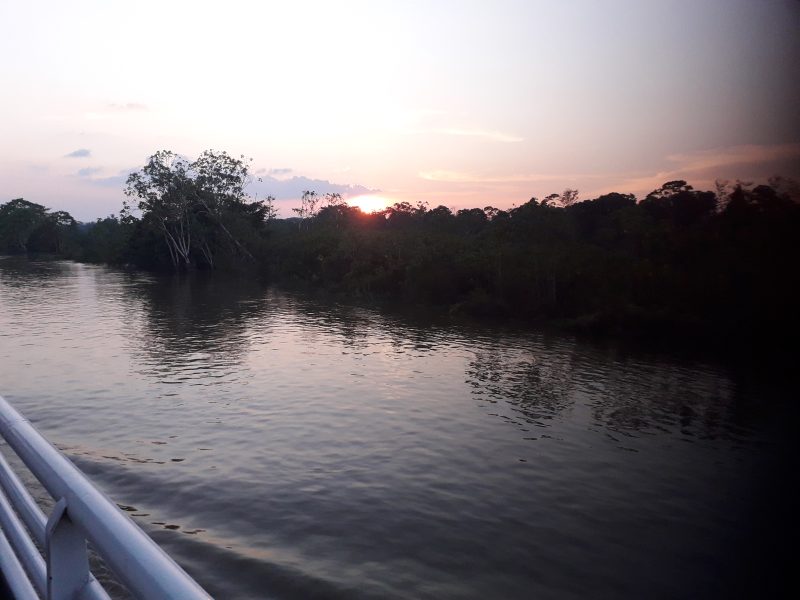
I arrived at the Manaus airport in the early hours of Tuesday, July 30th. The first thing I had to do was buy a hammock to sleep on the boat. The alternative would have been a cabin, but it was much more expensive.
True to form, the corporation hadn’t paid me yet. Anticipating this might happen, I had borrowed money from two of my best friends. One made the transfer immediately, but she made a mistake, and I had only 0.12 euros in my account… and I had to, one way or another, take the boat to get to Colombia; the other friend sent the money via Western Union.
As I walked, distressed, from the airport to the bus stop to catch a ride to the city center, I said out loud: “Please, God, help me!” Right at that moment, a young man stepped out of the building wearing a T-shirt with the word “FAITH” in capital letters.
I immediately remembered that weeks earlier, in Salvador de Bahía, I had seen the word “faith” twice. It was no longer a coincidence or a synchronicity; it was an order.
Without knowing what I would do, I went to the port, where I had no choice but to board. An “all or nothing” kind of situation. There was a boat that took four days to reach Leticia, but it wasn’t operating. To make my August 6th flight from Leticia to Bogotá, I had to set sail that day on the boat that took six days to cover the same distance.
To make the story more dramatic, I told the captain that if I missed my flight to Bogotá, I would lose the chance to see my family. I even told them about my refugee status in Italy. Anything to get him to let me travel without having paid first.
I imagine I touched the heart of the captain—a well-nourished man who, being Peruvian-Brazilian, spoke Spanish.
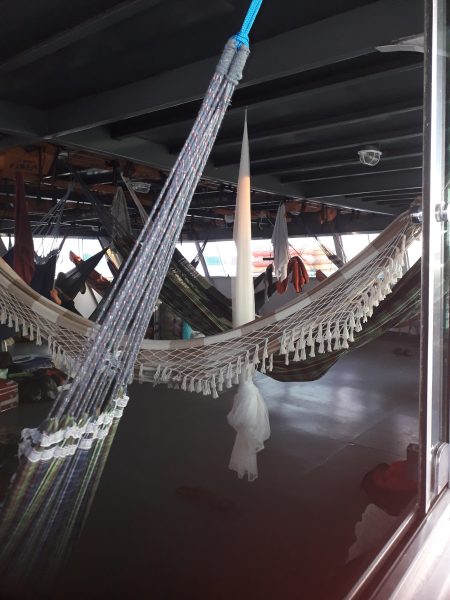
By around 1:20 p.m., we had already departed. I could feel the adrenaline rushing through my veins. Now, I just wanted to rest. I went up to the second floor of the boat where there was more space, as most people preferred the first floor, which had televisions and was closer to the dining area.
Since I didn’t have a hammock—I couldn’t buy one in time—I sat on the floor, where I planned to sleep.
Seeing me like that, a young woman approached me. She told me she had an extra hammock and could lend it to me. The friend she was supposed to travel with (she was an Australian of German descent born in India) couldn’t make the boat, so she and her boyfriend had a spare hammock.
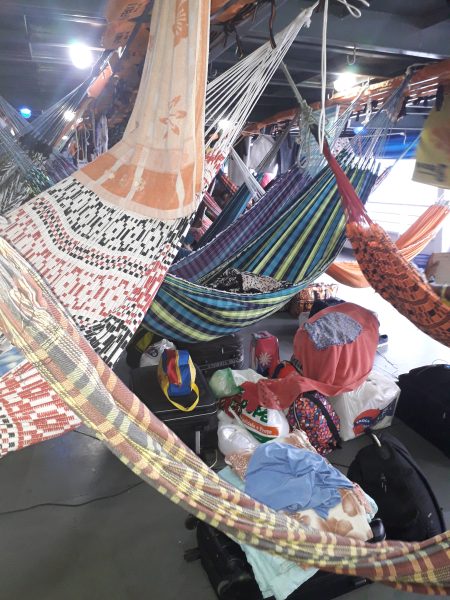
The odds of such an event occurring were infinitesimal… even without a ticket, I had won the lottery. I felt moved, confirming that there was something—call it God, Life, or the Universe—that wanted me to be there at that moment, despite all the setbacks. That giant, invisible hand, perhaps the same one that had prevented me from flying on December 13th, had been there accompanying me, opening (or closing) doors, pushing me, helping me carry my backpacks, and protecting me.
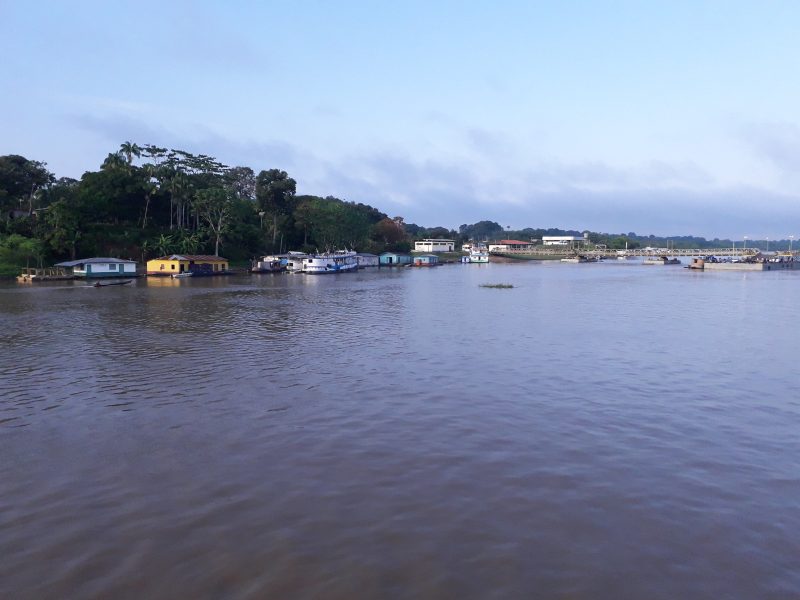
Hours later, sitting on the deck watching the stilt houses, I felt a curiosity bordering on awe at the locals’ lifestyle. How do they get groceries? How do they send their children to school? What is daily life like in a place like this? I wondered.
At night, lying in the hammock—which I was the first to use—I told myself that if I had to choose a single word to define the journey, it would be “miracle” or perhaps “synchronicity”… But no, the true word was “FAITH,” certainty without proof.
The next day, July 31st, I wrote in my diary:
“Almost a day of traveling now and so far everything has been smooth, even pleasant and fun. Yesterday I was destroyed. After an early dinner (5:30 – 5:45 p.m.), I stayed on the deck talking to some French backpackers. I even danced salsa with two of them. ‘Cali pachanguero, Cali, busca un nuevo sueño’… And I went to bed, or rather the hammock, at 10 p.m., maybe earlier. Now I’m reading a bit and remembering when, in January, I told Andrés I had decided not to have children, and he said: ‘Yes, that’s fine, you are a bird.’ At the time I agreed, but now I can see that birds fly together, in flocks, and they even build nests. So I want to be like them: flying with family and having our own nest.”
On the Amazon crossing, aboard the boat, I saw Brazilians with different features, but most shared a common trait: they were “well-fed” and liked drinking beer. There were also Peruvians and Colombians, as the destination was in the Triple Frontier.
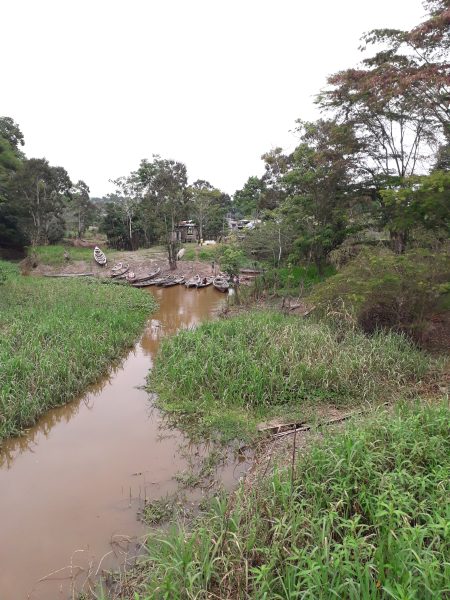
the image I had of the Amazon—closer to The Jungle Book—contrasted with what I saw, both during the navigation and every time the boat docked at the islands to unload merchandise and for passengers to get on and off. I had seen cows, houses with satellite dishes—though I saw no power lines—a school, and a couple of small churches.
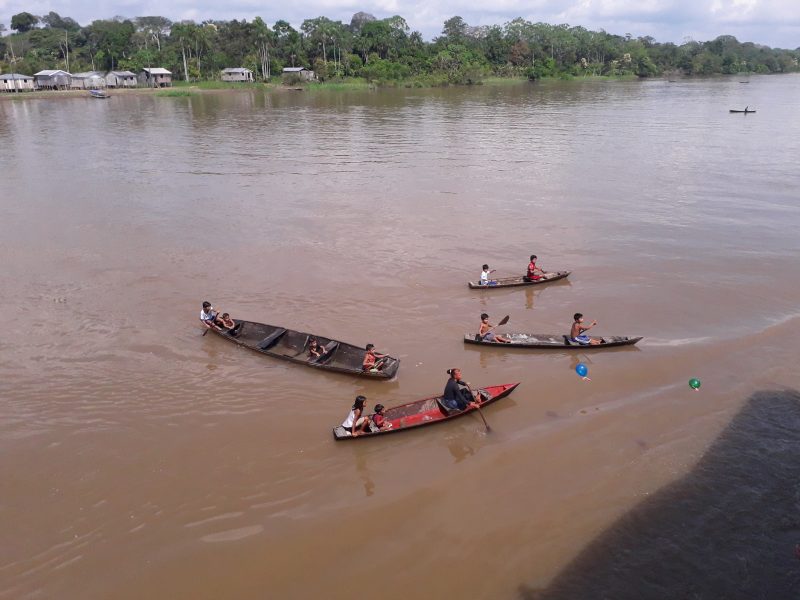
The first surprise, however, was seeing children in canoes approaching the boat. From the deck, I don’t know if it was crew members or passengers, people threw snacks to them, which they caught with expert skill.
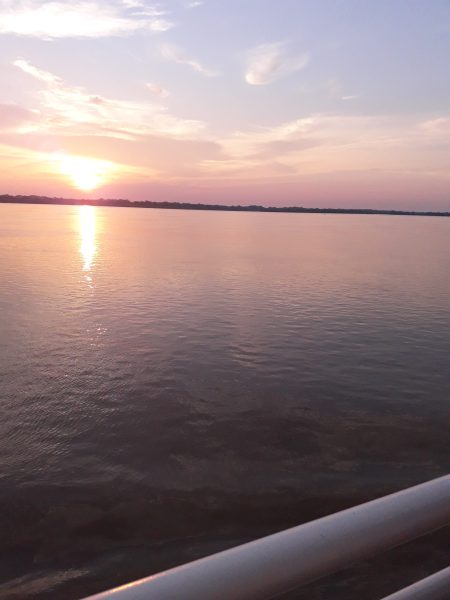
The routine consisted of admiring sunrises and sunsets, eating (breakfast, lunch, and dinner), reading, listening to music—or being tortured by those listening to reggaeton, vallenato, and trap—sitting on the deck (whether on a plastic chair or the floor) to contemplate the river, the vegetation, and the few animals that showed themselves, like the pink dolphin, lounging in the hammock, showering (which, for logistical reasons, I didn’t do every day), chatting, and going to sleep.
The diet was very limited, if not repetitive… at least for me, as I didn’t eat meat or chicken. Every day they served farofa—cassava flour cooked with bacon—with white rice. To eat something other than plain rice, I would pick out the bacon, though the pork fat remained.
Many didn’t even sit in the dining room, which was entered in shifts; they preferred to fill their food containers and eat sitting in their hammocks.
The temperature varied greatly: during the day, it felt like being in an oven, and at night, the cold was such that it was hard to sleep.
Every day was the same, though it could vary depending on the people I interacted with; because when you travel alone, it’s unusual to always be alone. It’s as if you have a light on your head that says “you can approach,” unlike when you travel with company and others only approach out of curiosity.
Like a Dominican man—a somewhat stout Black man with gold chains—who, out of nowhere, started talking to me… mostly to brag about himself. He looked like a rap or reggaeton musician, but he wasn’t. According to him, many thought the same and used to call him “the artist.” Far from that, he was a money lender. He had been living in France for four years, was married to a French woman (both had children from previous relationships), and was waiting for God to give him two children.
He told me all this without me asking many questions. His was more of a monologue. When he found out I was still single and childless, he told me: “¡Tienes que apuralte! (You gotta hurry up!) You only take your family with you, and when you live far from your family, your family is the one you make.” That last sentence, spoken with an “l” instead of an “r,” was the most sensible thing he said among all the nonsense.
Then, he began telling me about his life in Paris. “The whites are racist and hold the power; and the Black people don’t like me because I’m well-dressed and have ‘good hair,’” he told me. I found it curious that, just like in Venezuela, he had the concept of “good hair” (straight/wavy) and “bad hair” (curly). I wondered if he was aware of the (self)racism in his comment.
Next, he showed me the designer watch he was wearing when he arrived in Manaus, which, following the advice of a Venezuelan woman, he had taken off to avoid being robbed. He had also decided to wear flip-flops to avoid drawing attention, even though in France he would never go out like that.
I told him that, by contrast, throughout the entire trip I had dressed exactly as he saw me: in flip-flops or trekking boots, a multi-colored woven bag, a bandana, and baggy pants. “There are simple people who dress like gypsies,” he blurted out… and I bit back a laugh. Perhaps he, like the guy in Coroico, thought I was an incense seller.
And I seemed to hear my father saying, with manifest contempt: “A Black man who isn’t pretentious isn’t Black!”—alluding to those who, like him, never tire of singing their own praises. “The women of Black men are ugly. On the other hand, Dominican women (mestiza, indigenous, or white) are beautiful and make African or Franco-African men envious. Besides, white French women prefer Black men like me,” he fired off, for his talk was a bombardment of boasts—so much so that it brought to mind the adage: “Tell me what you brag about, and I’ll tell you what you lack.”
To Each Their Own
At 8 a.m. on August 2nd, we stopped at Fonte Boa, one of the many towns—some were actually cities with over a hundred thousand inhabitants—found in the Brazilian Amazon. A few people got off, and very few got on. Between locals and crew members, they loaded mattresses, boat engines, boxes of food, and snacks. I got the impression it was a large place, although nothing could be seen from the pier.
It was common to see families among the passengers, even with babies. Few women traveled alone. On my floor, besides me, there was a German woman who had been traveling solo for at least a year. She had already been to Africa and was now going to teach English in Colombia. She spoke some Spanish, though you could tell from a mile away she was European.
I never asked her about her experience as a traveler, but I’m sure she would have agreed that being on your own makes it easier to meet people. There was, for example, a young indigenous man who started talking to me. He had boarded in Tonantins and was heading to Leticia to find a cousin. He was about thirty and it was the first time in his life he had traveled. He was super excited, and perhaps he told me so that someone could witness that milestone in his existence.
Whenever we made a stop, if possible, I would get off to walk around. On one occasion, out of curiosity, I went into a small restaurant and was surprised when they gave me a cup of fruit salad for free. Exactly what I needed: something sweet and light.
At another point, I saw stilt houses… surrounded by trash. And I thought that those living closest to nature would have more ecological awareness!
The last “character” I needed to complete my collection of encounters on the boat wore a dark blue robe. He was a missionary from the “Church of Israel.” He sat next to me during dinner and talked to me about sanctifying the holidays, respecting the moon cycles and three dates: Passover, Corpus Christi, and October. He also spoke of the New Israel, which was located in Cuzco, Peru. Later, he wanted to come to my hammock to continue his preaching, but I managed to dodge him, and he ended up talking to another man who lived in the Amazon and was also a Protestant missionary. Then, they began talking about the Bible and agreed that “the enemy” works through the “weakest”: women.
Chauvinists and fanatics: Bingo! God created them and “the enemy”—as they would say—brought them together.
Now I could see a Peruvian flag. A little further ahead was Colombia. I felt that on dry land, a new chapter would begin.
Time, which passed with the same slowness as the boat, flew by in the end.
On the last day, Monday, August 5th, we arrived in Tabatinga at four in the afternoon, at least five hours later than scheduled. Once in Colombia, we (a Colombian couple who taught jiu-jitsu, the Australian girl, the German girl, and I) went in a shared taxi to the Brazilian immigration office. The officer said nothing about the fact that I had overstayed by a day or two.
After that, we went to the Western Union agency at the Banco de Brasil headquarters, and I couldn’t get the money because to do so I needed an account at that bank. In Leticia, on the Colombian side, I couldn’t withdraw funds from my Italian account either.
The money my friends had sent me through different channels was there, but it wasn’t available. The result was the same: I had less than 15 reais; and that was only because a guy I asked to share his internet with me gave me 10 reais after learning I was Venezuelan, like some of his relatives.
I didn’t know what to do or where to go… and it was already past 5 p.m. While I was there, outside the bank, the French guys passed by in a taxi and told me the rest of the group hadn’t found a hotel. I decided to take a taxi to the port to tell the captain I didn’t have the means but intended to pay him. While in the taxi, I changed my mind and decided to go to the hotel where the others were staying.
When I arrived, they were taking a taxi to another hostel because there were no rooms. Once at the other hotel, I decided to take a motorcycle taxi, which only charged me six reais to take me to the port and back. Once on the boat, I explained everything to the captain, who, lying on the bed watching TV, resembled a walrus. He gave me his bank account details and that was it. Back at the hotel, I had two or three things to take care of: pesos to pay for that night, money for dinner that night and breakfast the next day, and money to get to the airport. I ended up borrowing money from the German woman, who gave me the equivalent of 30 euros.
We had dinner, and back at the hotel, I showered and went to bed. I barely slept five hours. I had resumed my translations and, given the time difference, I had to get up at 5 a.m. I was also nervous because the day before I couldn’t go to the Colombian immigration office. I left the lodging before 7. After breakfast, I took a motorcycle taxi to the airport and waited a good while before the immigration officer arrived. At 8 a.m., I went to get my passport stamped. Afterward, the official invited me to breakfast, and even though my stomach wasn’t empty, I accepted because he seemed like a good person.
At 11:25 the plane took off, and around 1:15 p.m., we landed at El Dorado Airport in Bogotá.
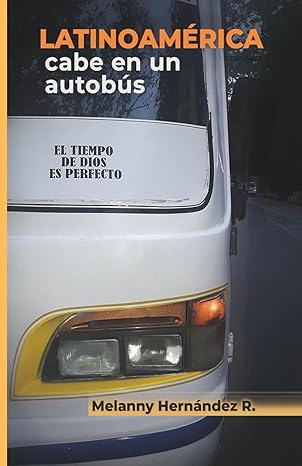
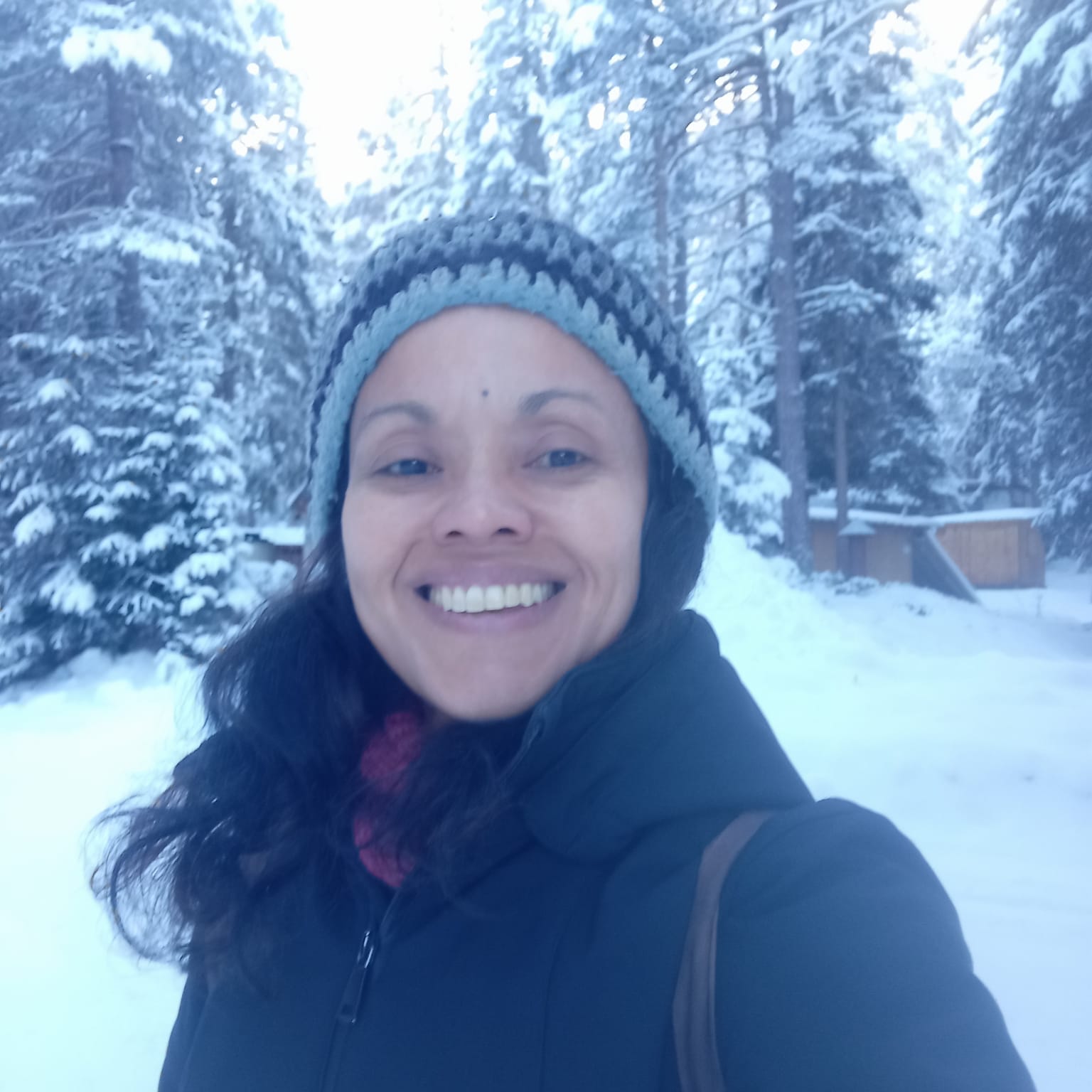
Melanny Hernández R. (Caracas, 1981) is a Venezuelan journalist, translator, and writer. Italy is her mobile base camp, although she has also lived in Spain, Ireland, and France. To earn a living, she has painted boats in Rome, harvested potatoes in the Prealps, and milked goats in South Tyrol. She has published three books in Spanish and three stories in Italian, including Latinoamérica cabe en un autobús (Latin America Fits on a Bus). She has been searching for her Ithaca for years and, in the meantime, writes about what she finds along the way.
This post is also available in:
 Español (Spanish)
